
How To Use Nicholson's Peerless Watercolors
How to Use Peerless DryColor Sheets
If you just opened your first Peerless order and thought "wait, these are really bright" — you're in exactly the right place. That intensity is the whole point. Here's everything you need to know to start painting with confidence.
What You're Looking At
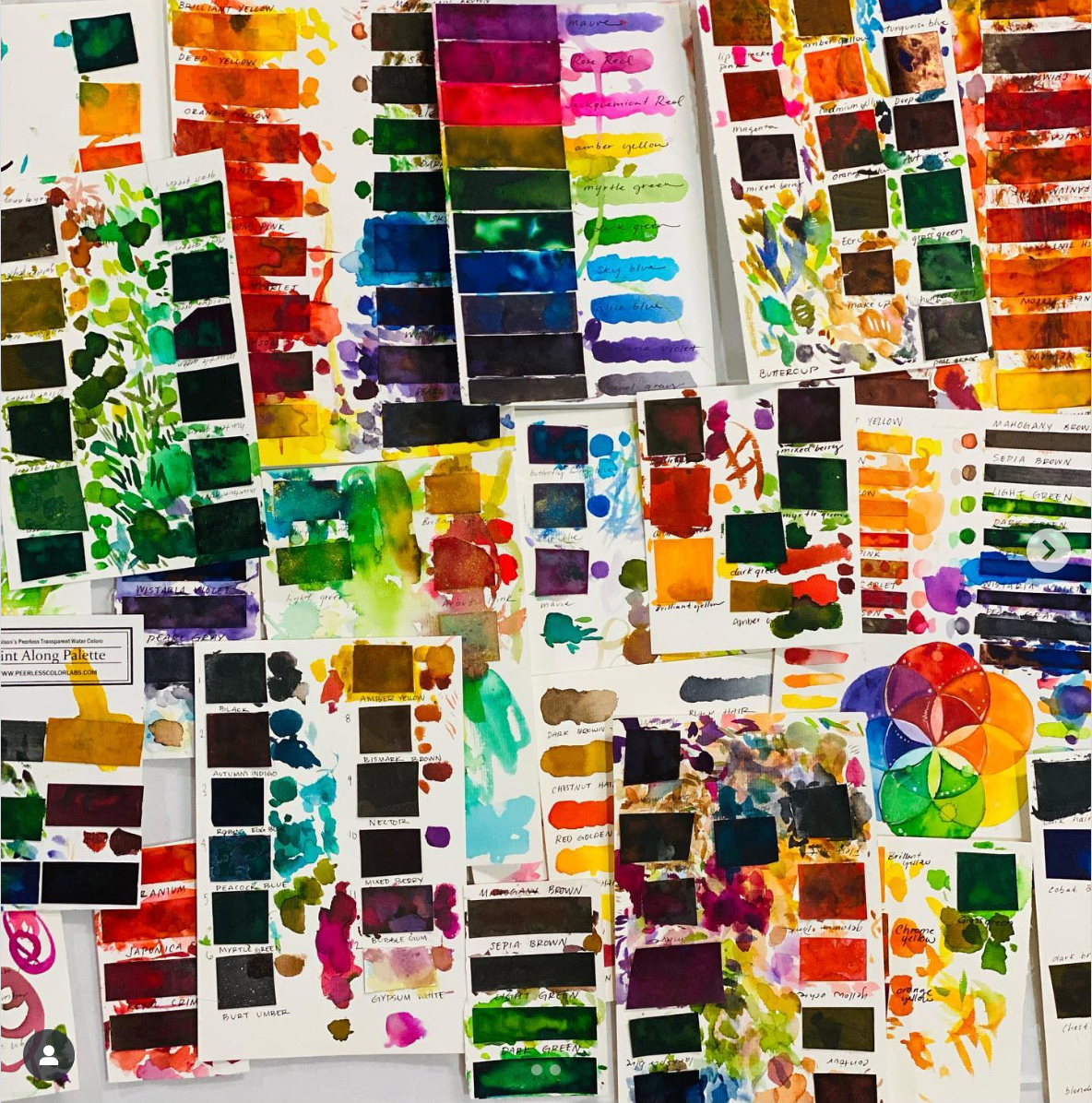
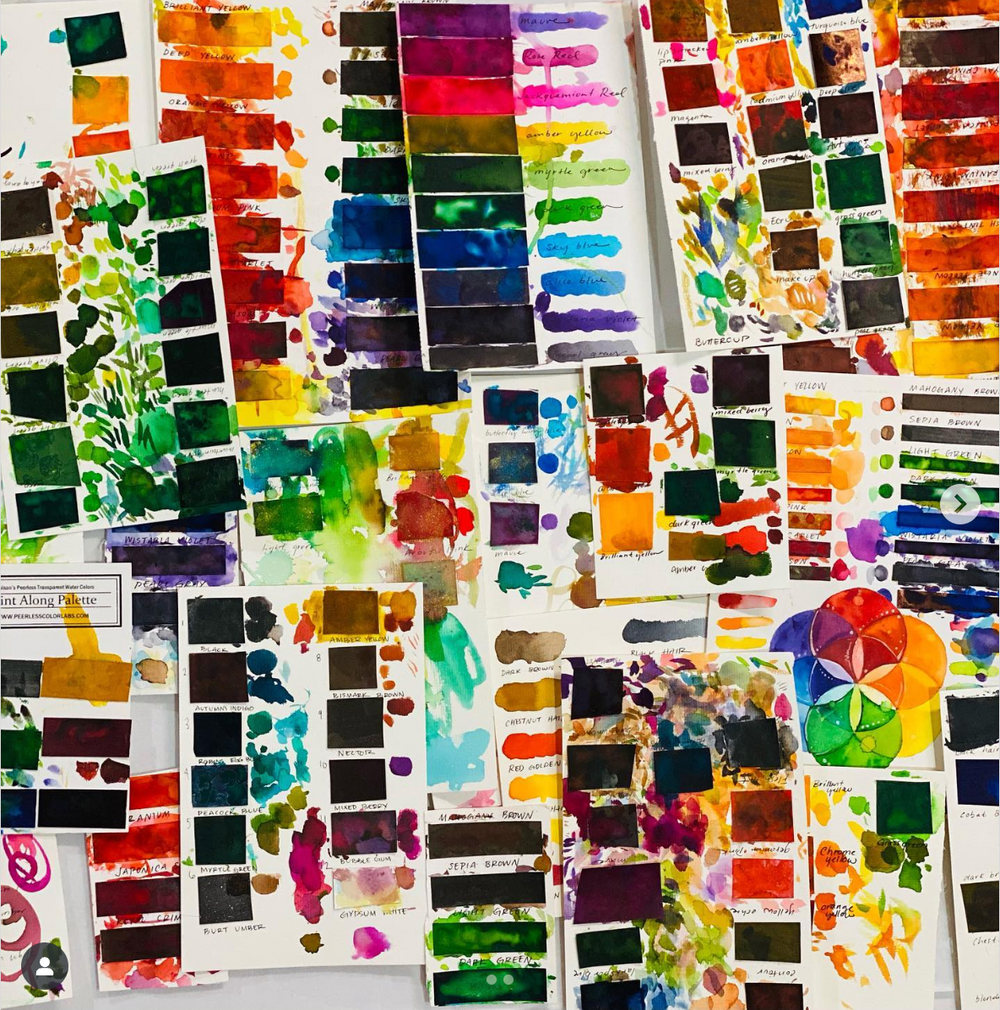
Peerless DryColor sheets are highly concentrated watercolor paint that's been applied to a proprietary fabric-based card stock and allowed to dry. The color on the sheet looks saturated and vivid — sometimes almost neon — because it is that concentrated. But watercolor is a water-based medium, and water is your volume knob. The more water you add, the softer and more transparent the color becomes. The less water, the more intense.
This is actually a feature, not a bug. Because the sheets start so pigment-rich, you have enormous control over the final color. You're not stuck with whatever the manufacturer pre-mixed — you're in charge.
You'll also notice that Peerless sheets are self-blending and highly transparent. That transparency is what makes layering and color mixing so effortless. Colors don't go muddy, they go deeper. It's one of the things artists love most about this format once they understand it.
The Three Ways to Use Your Sheets
There's no single right way to use Peerless DryColor sheets. Most artists find a favorite method and stick with it, or switch between them depending on what they're painting. Here are all three, from most saturated to most controlled.
Method 1: Direct Brush — Maximum Vibrancy
The simplest approach. Wet your brush with clean water, then touch it lightly to the back of the DryColor sheet. The wet brush activates and lifts the concentrated paint instantly. Apply directly to your paper.
Use this when: You want bold, vivid color right away — expressive backgrounds, strong washes, urban sketching where you want paintings that pop.
Good to know: Start with more water on your brush than you think you need. This is the method most likely to produce that "too bright" first reaction — but once you get a feel for how much water controls the intensity, you'll love the immediacy of it. The color you see on the sheet is your most saturated possible result. Everything gets softer and more luminous from there.
Method 2: Palette Drag — The Most Versatile Method
Wet your brush, pick up paint from the sheet, and drag it out onto a mixing palette or the plastic pocket inside your Sidekick or Complete Edition. Add water on the palette to reach your desired shade before touching your paper.
Use this when: You want more control over color temperature and intensity, or when you're mixing two colors together before committing to the paper.
Good to know: This is the method most experienced Peerless artists use day-to-day. Working on a palette lets you test your color before it hits the paper, and gives you room to mix multiple colors together. Because the sheets are self-blending, colors mix beautifully — no mudding, no fighting. Try dragging two colors side by side on the palette and letting them meet.
Method 3: Cut and Soak — Maximum Control, Great for Travel
Snip a small piece off a DryColor sheet — even a tiny corner — and place it in the well of a traditional palette or a small container with water. The piece dissolves into the water, and the bigger the piece, the more intense the resulting color. Let it sit for a minute, then paint directly from the well.
Use this when: You're building a custom travel palette, you want to pre-mix a large quantity of a specific color, or you're working on a palette with wells and want the paint to behave more like a traditional watercolor pan setup.
Good to know: Because the DryColor sheets are made from a proprietary fabric-based card stock — not paper — they won't dissolve into flecks or leave residue in your wash. You can remove the piece once the color is released, or leave it in to keep reactivating as you paint.
Why the Colors Look So Bright at First
Let's talk about the thing that surprises almost every new Peerless customer.
When you first see your DryColor sheets — or your first brushstroke — the colors can feel almost cartoon-bright. Like they're too much. You might wonder if you've done something wrong, or if the paint is somehow too intense to use in real paintings.
You haven't done anything wrong. The sheets are just that concentrated, by design.
The key is remembering that you're looking at a maximum-pigment starting point. Watercolor is a transparent medium — the light passes through the paint and reflects back off the white paper beneath it. The more water you add, the more light comes through, and the softer and more luminous the color becomes. A color that looks electric straight from the sheet can become the softest, most delicate sky wash with a well-watered brush.
Try this: do a test strip on a scrap of watercolor paper. Start with a nearly dry brush on the sheet to get maximum color, then add a little more water with each successive stroke. By the fifth or sixth stroke, you'll see the full range your sheet can produce — from rich and saturated all the way to a barely-there glaze.
That range is your palette. And it's a big one.
A Few Things Worth Knowing
They're non-toxic. All Peerless DryColor sheets are completely non-toxic, so you don't need to worry about pets, kids, or accidentally drinking from your brush water cup. (We don't recommend it, but we won't judge.)
They dry fast. You don't need to wait before turning a page in your Complete Edition or closing your Artist's Palette. The sheets dry quickly between uses, so light sticking if you flip through is nothing to worry about.
They layer beautifully. Because the paints are highly transparent, glazing — applying one color over a dry layer of another — produces luminous, vivid results rather than the muddy mess beginners sometimes get with more opaque paints. Let each layer dry before adding the next and watch the depth build.
A little goes a long way. The concentration means your sheets last considerably longer than you'd expect. Most artists are surprised by how much painting they get out of a single sheet.
Want to See It in Action?
Reading about how to use a new paint format only gets you so far. Our YouTube channel has tutorials showing all three methods in use — including what different water ratios actually look like on paper, and how to mix colors directly on the sheet.
FAQ
What do I do if my colors look too bright? Add more water. The intensity of Peerless DryColor sheets is a feature — they're extremely concentrated by design. A wetter brush produces softer, more transparent color. Try testing your color on a scrap piece of paper first and diluting until you reach the shade you're after. You have full control.
Do I need a special palette to use Peerless watercolor sheets? Not at all. Any surface that holds a small amount of liquid works — the lid of a plastic container, a ceramic plate, or the mixing surface on a Peerless Sidekick or Complete Edition. If you want to use the cut-and-soak method, a palette with wells gives you the most flexibility.
Can I use Peerless DryColor sheets in a traditional watercolor palette? Yes. Cut a small piece of the sheet and place it in a palette well with a drop or two of water. It will dissolve into the water and behave very similarly to a watercolor pan. The fabric-based card stock won't leave paper residue in your wash.
How long do the sheets last? A long time — much longer than most people expect. Because the paint is so concentrated, you're using very small amounts with each session. Many artists get months or years of regular painting out of a single set.
Are Peerless watercolor sheets good for beginners? They're actually one of the most beginner-friendly formats available, because the transparency and self-blending properties make it hard to muddy your colors. The main learning curve is adjusting to the concentration — once you understand that water controls the intensity, the format clicks very quickly.
Can I use Peerless sheets for layering and glazing? Absolutely. The high transparency makes layering especially beautiful. Each layer stays vivid and clean rather than going flat or chalky. Let each layer dry completely before adding the next, and you'll get the kind of luminous depth that watercolor is known for.
Ready to Paint?
If you're just getting started, the Peerless Complete Edition is a great first set — 15 versatile colors in the original booklet format, compact enough to slip into a bag. For a travel-ready palette you can use anywhere, The Sidekick is our most popular option for painting on the go.
If you have questions, we're always happy to help — just reach out. And if you want to see what other artists are making with these paints, our YouTube channel is a great place to start.